In this piece7 sections
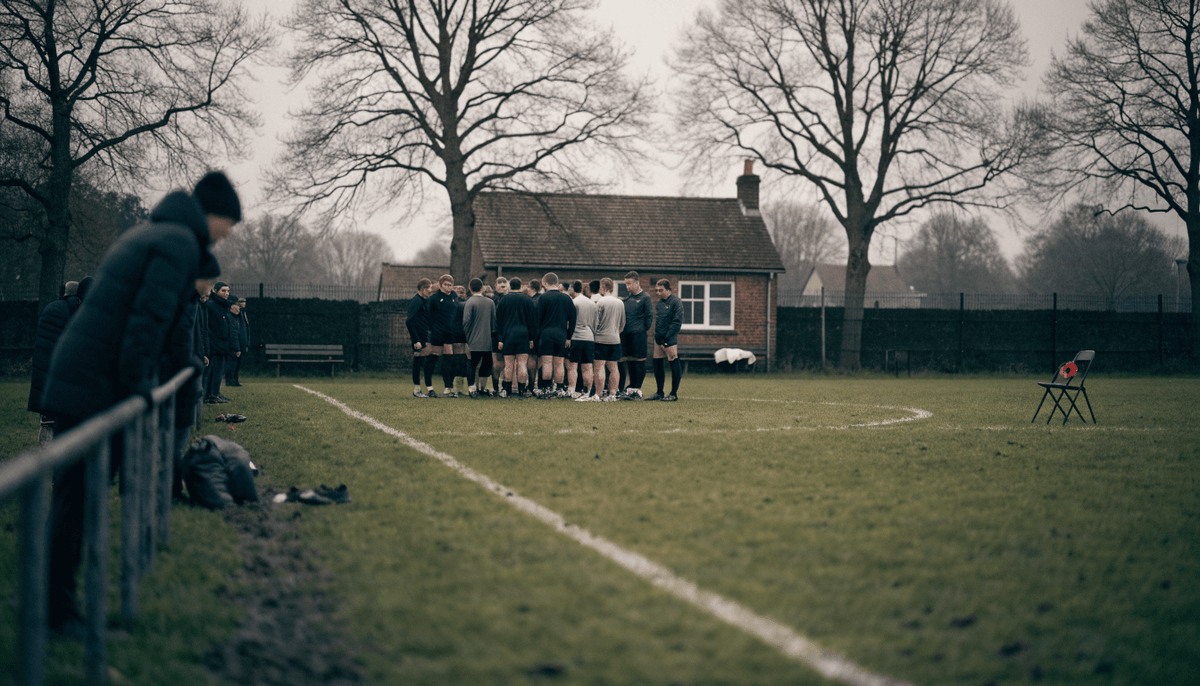
Next Sunday, 8 November, is Remembrance Sunday. Armistice Day falls on Wednesday 11 November. Almost every grassroots club will do something that weekend, and almost every club leaves it to the morning of the game: a quick word with the referee in the car park, a whistle, a ragged silence while someone's phone goes off by the tea hut.
It deserves better than that, and it doesn't take much. Twenty minutes of planning this week covers the silence, the kit, any collection and what goes on the club's pages. Here's the checklist.
The dates that matter this year
- Saturday 7 and Sunday 8 November: the main Remembrance weekend fixtures. Leagues normally ask for a minute's silence before kick-off at every game. The Essex Alliance League, for example, has asked "all of our clubs and referees to observe a minutes silence before kick-off" on Remembrance weekend.
- Sunday 8 November, 11am: the national two-minute silence. Many Sunday morning games will be warming up, or already playing, when it happens.
- Wednesday 11 November: Armistice Day. If you have a midweek fixture or training that week, decide now whether you'll mark it too.
The Royal British Legion launched the 2026 Poppy Appeal on 22 October. This year it focuses on Armed Forces families and aims to raise more than £50 million, with around 50,000 collectors and volunteers. If your club wants to help, this is the fortnight to do it.
Running the minute's silence properly
A good silence is mostly about who does what, sorted out before anyone's on the pitch.
- Agree it with the referee and the opposition before the warm-up. Confirm the plan: when it starts, who signals it and where everyone stands. Don't assume the away side knows.
- Line both teams up around the centre circle, with the officials in the middle. Substitutes and coaches stand on the touchline, not in the dugout.
- Give the crowd a warning. At a club with a PA, read a short announcement. Without one, have a committee member walk the rail two minutes before and ask people to put phones away and keep children close.
- The referee starts and ends it with the whistle. One minute is the norm before a match. If you play a recording of the Last Post first, test the speaker beforehand. A crackling phone held up to a microphone does more harm than no music at all.
- If someone breaks the silence, leave it. Don't confront anyone during the minute. If it was deliberate, the committee deals with it afterwards, calmly and through the proper channels.
If your Sunday game spans 11am: talk to your referee and the opposition about whether to pause at 11:00 for the national silence, or to hold your minute at kick-off instead. Your league secretary can tell you what the league expects. Whatever you choose, agree it before the game, not during it.
Poppies on kit: what's allowed
The poppy on football shirts has a messy history at international level. In 2016 FIFA brought disciplinary cases against the home nations for wearing poppies during World Cup qualifiers. In September 2017 IFAB clarified Law 4, the law on players' equipment. Since then the home nations have been able to wear the poppy on armbands at November internationals, as long as the opponents and FIFA agree in advance.
For grassroots football the practical rule is simpler: check your league's kit rules and tell the referee and the opposition before the game. Most leagues welcome it. Don't spring it on anyone on the day.
The easiest route is the Legion's own partner. Poppies4Kits sells kit items to clubs "lower down the football pyramid", with part of every sale going to the Poppy Appeal. The prices on the Legion's partner page are:
- Self-adhesive shirt poppies: £1.30 each, with at least 60p donated to the Legion.
- Black poppy armbands: £3.90 each, with at least £1 plus VAT donated.
- Customisable corner flags with your club crest: £20 each, with £10 plus VAT donated.
Poppies4Kits says it has raised more than £325,000 for the Poppy Appeal since 2015. Check current prices and delivery times on its shop this week. Stickers ordered on Thursday won't help you on Saturday.
Two things to avoid. Don't make home-made poppy badges or graphics that add your sponsor's logo or a commercial message. And don't print your own poppy merchandise to sell. The Legion protects the poppy as its emblem and has challenged unauthorised uses before.
Collecting for the Poppy Appeal at your ground
A bucket at the gate on Remembrance weekend is one of the simplest ways for a club to give something back. Do it the Legion's way:
- Contact your local Royal British Legion branch or Poppy Appeal organiser now. They can supply official collecting tins and poppies, and tell you how to hand the money over. Branches are busy this fortnight, so ring them early in the week.
- Collect on your own ground. Collecting in the street or outside the local supermarket is different. That usually needs a street collection permit from the council, and the Legion organises most of those itself.
- Keep it separate from club money. The tin goes to the Legion unopened, or is counted by two people and handed over in full. It never passes through the club bank account, the bar till or the treasurer's tin.
- Don't turn it into a raffle on a whim. A "Poppy Appeal raffle" is still a lottery, with its own rules about who can run it and how tickets are sold. If you want to run one, read up on raffle rules and licences first.
Your junior section
Remembrance can mean a lot to children who've never thought about it before, and plenty of junior clubs mark it well: a short explanation from a coach at training, poppies made at home and pinned to the clubhouse noticeboard, every age group joining in the silence.
Keep it age-appropriate and keep it simple. Remember the usual rules too. If you're taking photos of junior teams lining up for the silence, the same consent rules apply as any other matchday. Our guide to junior photos on social media covers what to check before you post, and your welfare officer should know what's planned. If you're not sure who that is, our safeguarding page checklist is a good place to start.
Your website and social pages
What you post that weekend says a lot about the club.
- One respectful post before the weekend: what the club is doing, the time of the silence, and how to give to the Poppy Appeal if you're collecting.
- Pause anything commercial that weekend. Take the sponsor shout-outs, kit sale posts and draw reminders off the schedule for Saturday and Sunday. A scheduled "last chance to win!" post landing during the silence is the kind of thing people remember.
- Look at your own history. Many older clubs lost players and members in both world wars, and some have a memorial board in the clubhouse that nobody has looked at properly for years. Remembrance weekend is a good moment to photograph it, add the names to the club website and invite members to share what they know.
The 20-minute checklist
Do these this week:
- Confirm your weekend and midweek fixtures and who's in charge at each one.
- Agree the silence plan with each referee and opposition secretary.
- Check the league's kit rules and order poppies or armbands now if you want them.
- Ring your local Legion branch about official collecting tins.
- Brief whoever's on the gate, the PA and the tea hut.
- Tell your welfare officer what the junior section is doing.
- Pause commercial posts for the weekend and write one respectful post instead.
Then, on the day, stand still for a minute. It's the easiest part of the whole thing and the part that matters most.
And if the volunteers who make the weekend work are the same people who make every weekend work, our guide to thanking club volunteers is worth a read before Christmas.
Dates and figures checked 1 November 2026 against the Royal British Legion's 2026 Poppy Appeal launch coverage (Forces News, 22 October 2026), the Legion's Poppies4Kits partner page, The FA's October 2017 statement on IFAB's Law 4 clarification, and league guidance from the Essex Alliance League. Check your own league's rules on kit and kick-off times.
Up the volunteers. Non-league — making the difference.