There is a moment that anyone who has ever filled in a grant application for a grassroots club will recognise. You spend three evenings wrestling with a portal, you attach quotes for the new floodlight bulbs or the drainage work, you press submit — and then you wait, with absolutely no say in how the pot you are applying to was sized, shaped or prioritised in the first place. The rules were written somewhere far away, some time ago, by people who have never had to padlock a container of corner flags in the rain.
Right now, for the first time in more than three decades, that is not quite true. The people who write the rules are asking what you think — and hardly anyone at our level seems to have noticed.
The Review Nobody Down Here Heard About
On 1 July, the Department for Culture, Media and Sport opened a call for evidence titled "National Lottery Good Causes: Fund what matters to you". It is a full, wide-ranging review of how the money the National Lottery raises for good causes is distributed — who gets it, how it is accessed, and whether the split still reflects what the public actually wants. It runs for twelve weeks and closes on 23 September 2026.
Here is the part worth sitting with: this is the first major review of the distribution model since the Lottery launched in 1994. The framework deciding where that money flows — the framework that has shaped every 3G pitch, every changing-room refurbishment, every community facility grant for thirty-two years — has never been fundamentally reopened. Until now.
DCMS's own framing is blunt: "This funding belongs to you. The billions of pounds raised should reflect the priorities of the British public." That is an invitation. The question is who takes it up.
Where the Money Goes Now
The current statutory split gives sport 20 per cent of good causes funding. Arts and culture take another 20, heritage another 20, and the remaining 40 per cent goes to charitable, health, education and environmental causes.
Within sport's slice, the money is divided again: Sport England receives 62 per cent of it, UK Sport 22.8 per cent, with Sport Scotland, Sport Wales and Sport Northern Ireland sharing the rest. Sport England is the body whose lottery-funded grant programmes grassroots clubs actually touch — the small grants that buy goalposts, fix roofs and keep junior sections running.
Every one of those numbers is now on the table. Not guaranteed to change — but open for argument, in public, for the first time since Blur and Oasis were fighting over the number one spot.
Why Non-League's Voice Is Missing — and Why That Costs Us
Be honest about what happens next. The arts world will respond in force; its national bodies have already published statements. Heritage organisations employ people whose whole job is answering consultations like this. The big charities have policy teams.
Non-league football has a volunteer treasurer who is also the kit man, and a secretary answering WhatsApp messages about half-time oranges at eleven at night. Nobody at Step 5 has a public affairs department. Which is precisely how a thirty-two-year funding settlement gets rewritten with everyone else's evidence on the table and ours missing.
And we have evidence the policy people cannot manufacture. We know what pitch hire actually costs in 2026. We know what happened to utility bills in clubhouse kitchens. We know that a £2,000 grant can be the difference between a junior section running next season or folding, and we know exactly how many unpaid evenings the current application processes consume. The clubs at Steps 3 to 7, the Sunday leagues, the county competitions — collectively they hold a picture of community sport's finances that no distributor's annual report captures.
Sport already holds a statutory 20 per cent share. The risk is not only that the share shrinks. It is that the review reshapes how the money is accessed — and that without grassroots voices, it gets reshaped around the needs of bigger, louder, better-staffed organisations.
What to Actually Say
A response does not need to be a polished policy paper. The strongest submissions from our level will be specific and lived. If you run a club, a league or a county association, consider putting in writing:
- What lottery-funded grants have actually done for you — the pitch, the defibrillator, the changing rooms — and what they failed to reach.
- The real cost pressures: pitch hire, insurance, referee fees, utilities. Numbers from your own accounts carry more weight than any average.
- The application burden: how long forms take a volunteer, how often small clubs give up, and what simpler, smaller, faster grants would unlock.
- Certainty over lump sums: whether multi-year or recurring support would serve community clubs better than one-off capital pots.
- Where the money lands: whether it reaches the base of the pyramid or pools further up — and what you have seen with your own eyes.
If you sit on a league committee, encourage member clubs to respond individually. Fifty short, specific answers from fifty clubs say more than one carefully worded letter from anyone.
How to Respond — It Takes Twenty Minutes
The Government's preferred route is the online survey linked from the call for evidence page — search "National Lottery Good Causes: Fund what matters to you" on GOV.UK. If forms are not your thing, responses can be emailed to lottery-good-causes@dcms.gov.uk. The deadline is 23 September 2026. Individuals can respond, not just organisations — committee members, coaches and supporters all count.
Put it on the agenda of your next committee meeting. Better: do it before then, tonight, with the club accounts open in the next tab.
Don't Wait for Whitehall
One caution to finish. However this review lands, its outcomes are years away, and no club should bet next season's budget on a policy consultation. The clubs that endure are the ones building their own reliable income now — matchday revenue, local sponsorship, and recurring community fundraising through platforms like PlayFundWin that turn supporter goodwill into steady weekly income without adding to the volunteer load.
Respond to the consultation because the next thirty years of grassroots funding deserve our fingerprints on them. Build your own income because your club's next thirty years cannot wait for anyone's review.
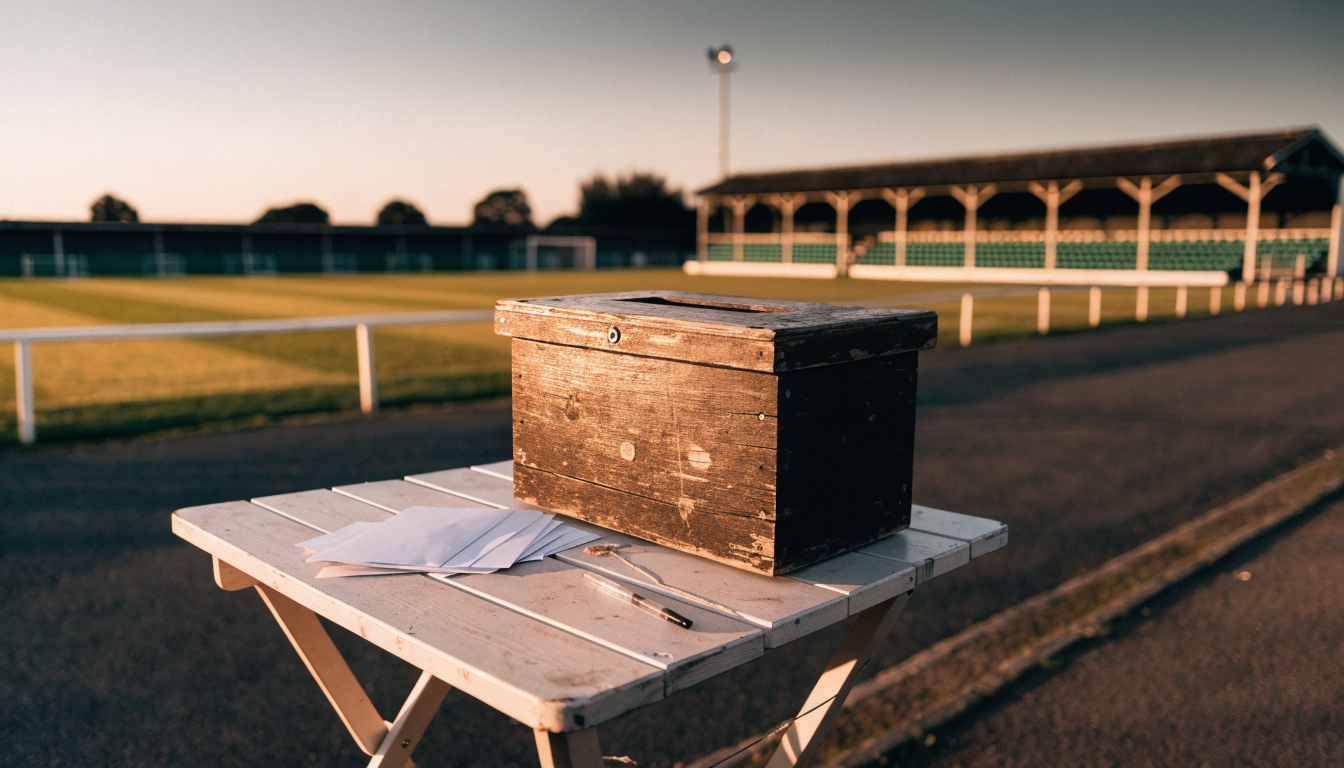
The suggestion box is out on the table until 23 September. It would be very like non-league to grumble about the outcome in the clubhouse for the next decade. It would be very much better to fill the thing in.
Up the volunteers. Non-league — making the difference.
More from the LeaguePages blogPrefer the interactive version? Read this post in the app at leaguepages.com/blog/national-lottery-good-causes-review-non-league-have-your-say — with related reads, series navigation and saved posts.