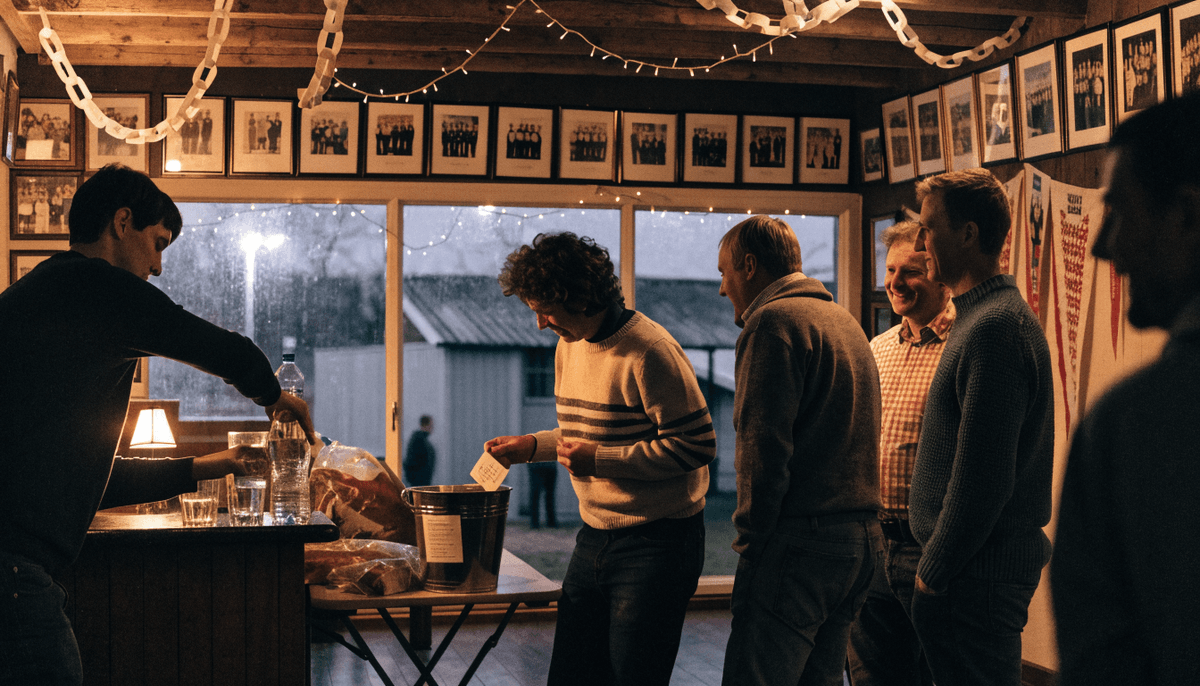
Every club has a Christmas do. Most clubs organise it at the bar three weeks before: someone says "we'll do a raffle", someone else says "my mate DJs", and nobody asks whether the club is actually allowed to sell a pint to the parents' plus-ones. Usually nothing happens. Occasionally the licensing officer drops in, or a letter about the music arrives in January.
The fixes are cheap (£21 for a notice, one phone call for the music) but they run on deadlines. If your party is on Saturday 19 December and it needs a Temporary Event Notice, the council has to have it by Friday 4 December. Here's the 20-minute version for clubs in England and Wales. Scotland and Northern Ireland run separate licensing systems, so check with your council there.
Step 1: Decide who the party is for
Almost everything follows from one question: is this a party for members and their guests, or is it open to anyone?
- Members and their guests, in a clubhouse with a club premises certificate. Most members' sports clubs with a bar hold one. It lets the club supply alcohol to members and sell it to members' guests, and it can cover music and dancing. If that's your party, you're probably covered already. Check the certificate's hours and what entertainment it lists.
- Open to the public, or the hall hired out to non-members. A club premises certificate doesn't stretch this far. Councils are clear that it can't be used for events open to the general public, or for hiring the clubhouse to non-members for private functions. Unless the building has a full premises licence, you need a Temporary Event Notice (TEN).
- A building with no alcohol licence at all (a pavilion, a school hall, a sports centre without a bar licence). Any sale of alcohol needs a TEN, and that includes a "complimentary" glass of fizz that's really part of the ticket price.
- A pub, hotel or social club function room. The venue's own licence covers the bar and usually the music. Get them to confirm it in writing, then skip to the raffle.
The common trap is the "members only" party advertised on the club's public Facebook page with tickets sold to anyone who messages. That's a public event, whatever the poster says.
Step 2: If you need a TEN, get the dates right
A TEN is a notice to the council, not an application. If nobody objects, the event can go ahead. The rules that matter:
- It's given by an individual aged 18 or over, not by the club.
- It costs £21.
- There must be fewer than 500 people at any one time. That's 499, and it includes the volunteers on the bar and the DJ.
- An event can last up to 168 hours (seven days).
- A single set of premises can have 15 TENs a year, covering no more than 21 days in total. A party that runs past midnight counts as two days.
- Each person can give five TENs a year (two of them late). Personal licence holders can give 50 (ten late).
- A standard TEN needs at least 10 clear working days. That doesn't count the day the council receives it, the day of the event, weekends or bank holidays.
- A late TEN can go in 5 to 9 clear working days before. Don't plan on one: if the police or environmental health object, the council issues a counter notice and there's no appeal.
Police and environmental health get three working days to object to a standard notice. If you apply online through GOV.UK or your council's site, the council tells them for you. On paper, you send them copies yourself.
December 2026 deadlines (standard TEN, received by)
- Party on Friday 11 December: Thursday 26 November
- Party on Saturday 12 December: Friday 27 November
- Party on Saturday 19 December: Friday 4 December
- New Year's Eve, Thursday 31 December: Monday 14 December (Christmas Day and the Boxing Day substitute holiday on Monday 28 December don't count as working days)
Some councils count working hours or office closures their own way, so read your council's TEN page. Our house rule is simple: get it in by Friday 27 November for anything in December.
On the form, tick the sale of alcohol, and tick regulated entertainment too if there's a band, a DJ or a disco. It costs nothing extra. Add late-night refreshment if you'll serve hot food after 11pm. On the night, keep the acknowledged notice on display where the bar is.
Step 3: Music needs a second, separate licence
A TEN deals with licensing law. Copyright is a different question. Playing recorded or live music in public usually needs TheMusicLicence from PPL PRS, which since 2018 has replaced the old separate PPL and PRS for Music licences. When the joint licence for amateur sports clubs was introduced, PPL said a change in the law meant almost all amateur sports clubs now needed one for recorded music.
- Already licensed for background music in the bar? A disco is a different kind of use. PPL PRS says it can amend an existing licence to cover an event, so ring before the party, not after the letter.
- It isn't the DJ's licence. The venue or the organiser is responsible for the music played there. A DJ turning up with a laptop doesn't change that.
- Hiring a hall? Ask the hall whether its licence covers events with music.
- Cost depends on the venue and how the music's used. PPL PRS's own example for a one-off disco in a pub or bar for up to 75 people for an hour is £19.76 plus VAT. Its customer line is 0800 0720 808.
Step 4: The raffle: sell it and draw it on the night
A raffle at the Christmas do is an incidental lottery under the Gambling Act 2005. You don't need a licence or a council registration as long as you follow the Gambling Commission's conditions:
- The raffle is incidental to the party. It can't be the main reason for the event.
- Tickets are sold only at the event, to people who are there. The draw can happen during the party or after it.
- No more than £100 of the proceeds can go on expenses such as tickets or equipment hire.
- No more than £500 of the proceeds can go on bought prizes. Donated prizes have no limit.
- No rollovers into another lottery.
- The money goes to the club or a good cause, not anyone's pocket.
Two things catch clubs out. First, selling tickets in advance, on WhatsApp, at training or on Facebook, to people who won't be at the party. Once you do that it's no longer incidental. It becomes a society lottery, with a council registration and paperwork after the draw. If you want a Christmas draw that sells for weeks, set it up properly: PlayFundWin's advent calendar draw guide covers how.
Second, the hamper nobody claims. Because rollovers aren't allowed, it can't simply go into the next raffle. Decide before the draw what happens to an unclaimed prize (a redraw on the night is the cleanest answer) and say so when you announce the winners. PlayFundWin's draw-night run-sheet has the full routine.
One more: Gift Aid can't be claimed on raffle tickets. Buying a ticket isn't a donation.
Step 5: The bits that aren't paperwork
- Juniors and families. If it's a family party, agree when the children's part ends, keep the bar out of the way, and brief your welfare officer. If parents can't find who that is, our welfare officer checklist helps. Photos of juniors going on social media? Read blur before you post first.
- Insurance. Check the club's public liability policy covers social events, especially in a hired venue.
- The bar. Put someone sober in charge, agree that anyone who looks under 25 gets asked for ID, and don't let the busiest volunteer run it all night.
- Getting home. Post local taxi numbers by the door and agree who's driving before the first drink.
- Saying thank you. It's the obvious night to thank the people who keep the club going. Our guide to a volunteer thank-you collection keeps it from getting awkward.
The 20-minute committee checklist
- Decide: members and guests only, or open to anyone? Put it on the poster.
- Check what licence the venue has: club premises certificate, premises licence, or none.
- If you need a TEN, name one person aged 18+, check they haven't used their five, and submit by Friday 27 November.
- On the TEN, tick alcohol and regulated entertainment.
- Ring PPL PRS, or ask the venue, about the music licence.
- Raffle: sell on the night only, cap bought prizes at £500, keep a list of prize donors.
- Agree the unclaimed-prize rule before the draw.
- Brief the welfare officer if juniors will be there.
- Check the insurance covers the event.
- Display the TEN on the night.
Then enjoy the party. You've earned it, and so has everyone who's spent the autumn putting nets up in the dark.
Rules checked 7 November 2026 against GOV.UK's temporary events notice guidance, council TEN guidance (Cambridge, Watford, Southwark, Plymouth), council club premises certificate guidance (Barking and Dagenham, Brent, Sutton), the Gambling Commission's incidental lottery guidance, PPL PRS's help and live events pages, and the 2026 UK bank holiday dates. Licensing practice varies between councils, so check yours before you submit. This is practical guidance, not legal advice.
Up the volunteers. Non-league — making the difference.
More from the LeaguePages blogPrefer the interactive version? Read this post in the app at leaguepages.com/blog/christmas-party-licence-raffle-music-grassroots-club-2026 — with related reads, series navigation and saved posts.